AI is rapidly changing how people search for information online. Now, it is beginning to transform how people shop as well. Shopify is preparing to roll out a new feature called Agentic Storefronts, designed to allow customers to discover and purchase products directly through AI assistants.
With this update, shoppers can interact with tools like ChatGPT, ask for product recommendations, and complete purchases without visiting a traditional online store. Instead of browsing through multiple websites, users may soon rely on AI to find and purchase products within a single conversation.
For Shopify merchants, this new development could open a completely new sales channel powered by ChatGPT. In this article, we will explore what Shopify Agentic Storefronts are, how they work, and what this update could mean for the future of eCommerce.
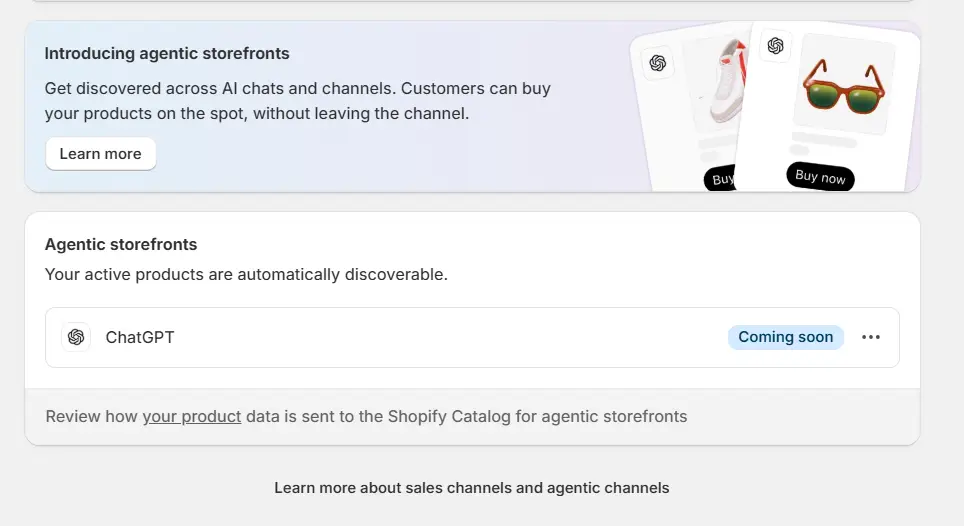
What is Shopify Agentic Storefront?
Agentic Storefront is a new feature from Shopify that allows AI assistants to access a store’s product catalogue and facilitate purchases directly within AI conversations.
Traditionally, customers search for products using search engines or marketplaces and then visit a website to complete their purchase. With Agentic Storefronts, the shopping journey can happen entirely inside an AI chat interface.
This means AI assistants can act as shopping agents, helping users discover relevant products based on their needs, preferences, and budget.
For merchants using Shopify, product information such as titles, prices, images, variants, and availability can be made accessible to AI platforms. These systems can then recommend products directly to users during conversations.
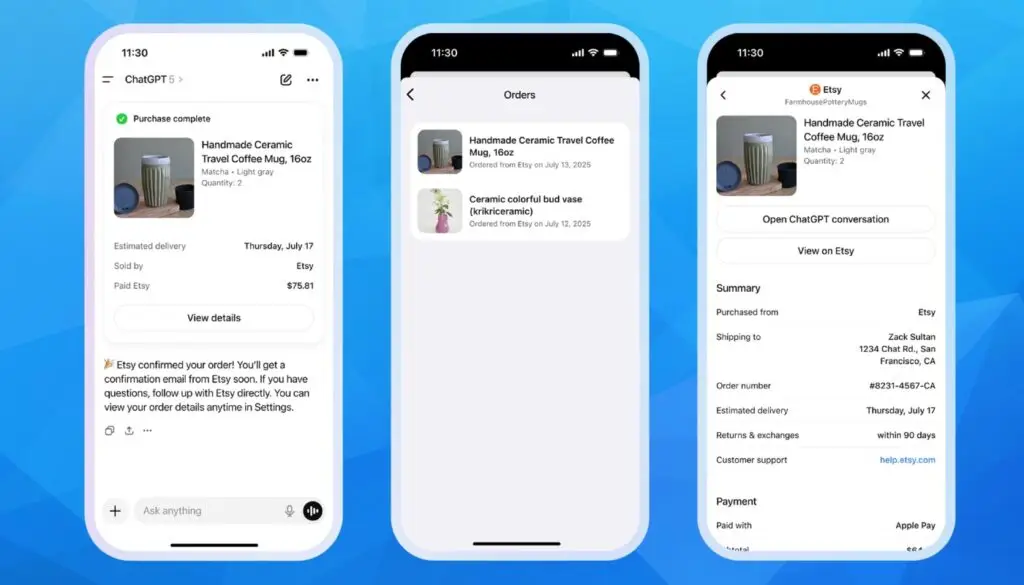
How Shopping Inside ChatGPT Works
The concept behind Agentic Storefronts is simple. Instead of browsing multiple websites, users can ask an AI assistant for product recommendations and complete the purchase within the same interface.
A typical shopping interaction may look like this:
A user asks ChatGPT for product recommendations, such as “best travel coffee mug under $100”
The AI searches available product data from Shopify stores.
Relevant products are displayed within the chat interface.
The user selects a product and completes the purchase directly through the AI platform.
Even though the purchase happens within the AI interface, the order is still processed through the Shopify backend. Merchants continue to manage inventory, orders, and customer data through their existing Shopify admin.
Key Features of Agentic Storefronts
Shopify’s Agentic Storefronts introduce several capabilities that could change how online shopping works.
AI-powered product discovery
Customers can discover products through natural language conversations instead of traditional keyword searches.
Direct purchasing inside AI platforms
Users may be able to complete purchases without leaving the AI assistant.
Structured product data for AI systems
Shopify prepares product information in a format that AI systems can easily understand, including attributes, pricing, variants, and availability.
A new sales channel for merchants
AI assistants could become another distribution channel alongside search engines, marketplaces, and social media platforms.
What This Means for E-Commerce Businesses
The introduction of Agentic Storefronts signals a potential shift in how products may be discovered online.
For many years, search engines have been the primary gateway to eCommerce websites. However, AI assistants are increasingly becoming a new starting point for product discovery.
If more consumers begin asking AI tools for product recommendations, merchants may need to ensure their product data is clear and detailed enough for AI systems to interpret and recommend effectively.
This could increase the importance of well structured product information, detailed descriptions, and clearly defined product attributes. In other words, the way products are presented and described online may become just as important for AI systems as it is for traditional search engines.
The Growing Importance of GEO (Generative Engine Optimisation)
As AI assistants become more involved in the shopping journey, a new concept is gaining attention in the digital marketing industry: Generative Engine Optimisation (GEO).
While traditional SEO focuses on ranking websites on search engines, GEO focuses on getting products and brands recommended by AI systems such as ChatGPT.
With the upcoming rollout of Agentic Storefronts from Shopify, AI assistants may be able to browse product data from merchants and recommend relevant items directly within conversations. This means customers could discover products without performing a traditional search or visiting a category page.
For eCommerce businesses, this could create a new type of optimisation challenge. Instead of competing only for rankings on search engines, brands may also need to ensure their products are easily understood, trusted, and recommended by AI systems.
Factors that may influence AI recommendations could include:
Clear, structured and LLMs-friendly product information
Detailed accurate product descriptions and attributes
Strong brand credibility across the web
Helpful content that explains products and use cases
Consistent product data across all platforms and channels
In many ways, GEO could become the next evolution of SEO, especially as AI assistants increasingly guide users through the product discovery process.
How Merchants Can Prepare for AI Commerce
As AI assistants begin recommending products directly to users, merchants may need to rethink how they structure their product information and content.
To improve visibility within AI driven shopping environments, businesses should focus on creating product pages that are clear, informative, and easy for machines to interpret.
Some practical steps include:
Writing detailed product descriptions that explain features and use cases
Using structured product attributes such as size, colour, materials, and compatibility
Maintaining consistent product data across all platforms and channels
- Creating and maintaining LLMs.txt file for content sources
Publishing helpful guides , FAQ or blog content related to the products
Well structured information makes it easier for AI systems to understand products and recommend them to the right audience.
How AI Could Change the Online Shopping Journey
If AI shopping becomes widely adopted, the typical eCommerce journey may change significantly.
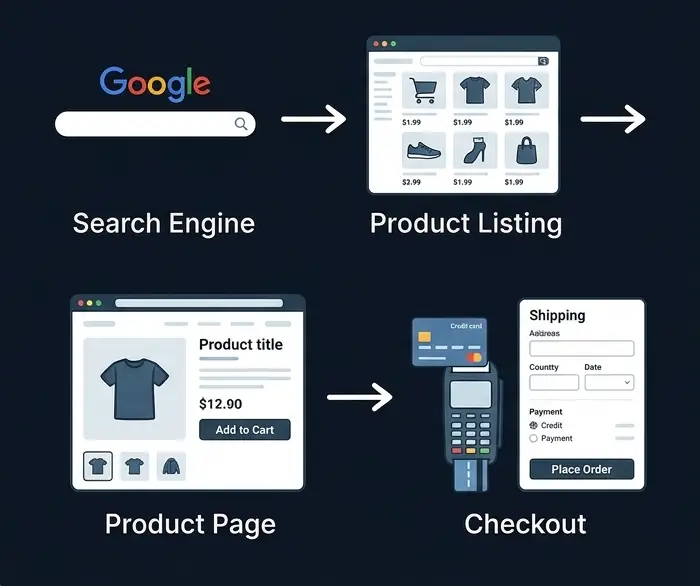
Standard eCommerce journey
Search engine → product listing → product page → checkout
AI Integrated eCommerce journey
AI assistant → product recommendation → purchase
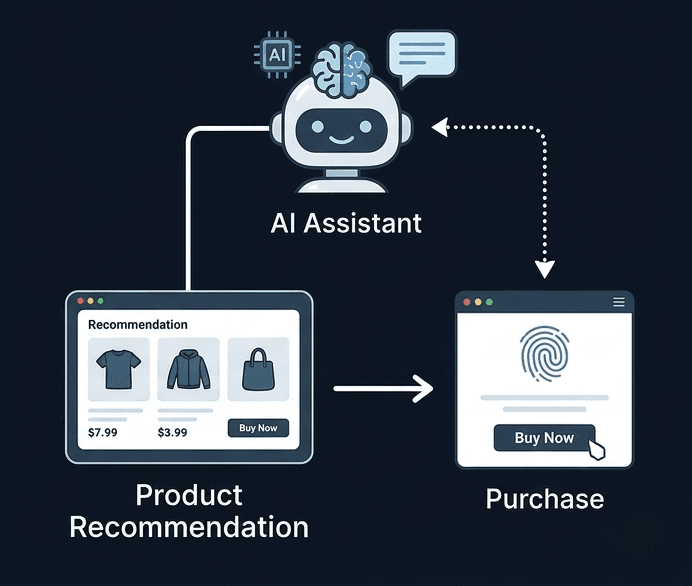
Instead of comparing multiple websites manually, customers may rely on AI to evaluate options and present the most relevant products.
For businesses, this could shift the focus from driving website traffic to ensuring their products are visible and recommended within AI systems.
Should Shopify Stores Enable Agentic Storefronts?
For many Shopify merchants, this feature will likely be enabled automatically once the integration becomes available.
Allowing AI platforms to access product data could offer several potential advantages:
Additional product visibility through AI assistants
A new discovery channel for customers
Minimal setup required for merchants
However, businesses may also want to monitor how their products are presented by AI systems and how this new channel affects attribution and customer journeys.
As with many new technologies, early adoption may provide useful insights into how AI driven shopping evolves.
Is AI Commerce the Next Big Shift in E-Commerce?
Every major shift in digital commerce has been driven by new technology.
First came search engines, which allowed users to discover products through keywords. Later, social media platforms created new shopping opportunities through targeted advertising and influencer marketing.
AI shopping assistants may represent the next stage of this evolution. As conversational interfaces become more advanced, users may increasingly rely on AI tools to research products, compare options, and complete purchases.
Features like Shopify’s Agentic Storefronts suggest that AI driven commerce may soon become an important part of the eCommerce ecosystem. Businesses that understand this shift early may have a significant advantage as AI shopping continues to develop.
Final thoughts
Agentic Storefronts represent an early step towards a future where AI assistants act as personal shopping agents. Instead of browsing multiple websites, users may increasingly rely on AI to research, compare, and purchase products on their behalf.
For merchants using Shopify and digital marketing professionals, this update highlights the growing relationship between AI and eCommerce.
While it is still early, the integration of AI assistants such as ChatGPT into the shopping journey could gradually reshape how customers discover products and interact with online stores. Businesses that understand these changes and adapt early may be better positioned as AI driven commerce continues to evolve.
About the Author

Hashan De Zoysa
Digital Marketing and SEO Specialist with 7+ years of experience in e-commerce growth, paid advertising, and search engine optimisation. Currently working at Arbortec Forestwear as a Web Design and Digital Marketing Specialist.