This is a personal review of my time studying the MSc Digital and Social Media Marketing at the University of Dundee as an international student. This isn’t a sponsored review or an attempt to convince anyone to choose the University of Dundee. It’s simply my genuine experience as an international student, including what I enjoyed, the challenges I faced and the lessons I learned along the way.
Choosing where to study abroad is one of the biggest decisions you’ll ever make. There are countless university rankings, promotional videos and student testimonials online, but sometimes what you really want is an honest opinion from someone who has been through the experience. This article is exactly that.
In September 2022, I moved from Sri Lanka to Scotland to begin the MSc Digital and Social Media Marketing programme at the University of Dundee. Looking back, it was one of the best decisions I made for both my personal and professional growth.
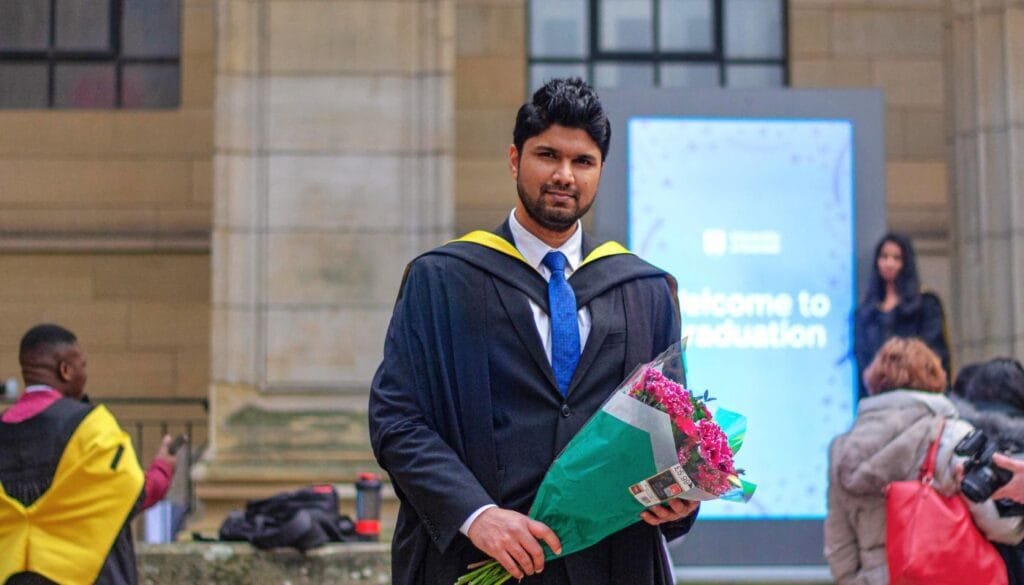
Before coming to the UK, I had already spent several years working as a Digital Marketing field in Sri Lanka. I enjoyed my career, but I knew I wanted to take the next step. The MSc Digital and Social Media Marketing programme immediately stood out because it wasn’t just about learning the latest marketing tools. Instead, it focused on understanding marketing strategy, consumer behaviour and how to apply theory to real business situations. That was exactly what I was looking for.
My goal wasn’t simply to earn another certificate. I wanted to become a better marketer and prepare myself for an international career.
My First Days in Dundee
Like most international students, I arrived with a mixture of excitement and nervousness. I still remember my first day at the university. My first task was collecting my student ID card, and I was worried about finding the correct building. Since everything was new, even navigating around campus felt like a challenge. Fortunately, the process was straightforward. The university staff were helpful, everything was well organised, and within a short time, I officially became a University of Dundee student.
The first few weeks were also exciting because I met students from many different countries. Everyone had their own background, career goals and reasons for choosing the programme. Speaking with people from different cultures opened my mind and made the experience much richer than I had imagined. Although it took a little time to adjust to a new country, new routines and Scottish weather, I gradually settled into university life.
Communication and Student Support
One area that genuinely impressed me throughout my studies was how the University of Dundee managed communication. Almost everything students need can be accessed through the university’s online systems. Communication was mainly handled through the student portal, university email and the University of Dundee mobile app.
Personally, I found the mobile app particularly useful. While there were a few small areas that could be improved, it made everyday student life much easier by providing quick access to:
- Class timetables
- Module information
- University emails
- Library access
- Important announcements
Instead of checking multiple websites, I could access most of what I needed from one place. It helped me stay organised throughout the academic year and ensured I never missed important updates or deadlines.
What I Thought About the Course
Coming from an industry background, I was curious to see whether the course would simply repeat what I already knew. Thankfully, it didn’t…
One of the biggest strengths of the MSc Digital and Social Media Marketing programme is that it focuses on developing strategic thinking rather than memorising theories. In today’s marketing industry, new platforms, AI tools and technologies appear constantly. If you only learn how to use today’s software or tools, your knowledge can quickly become outdated.
Strategic thinking is different. Understanding customer behaviour, solving business problems and making informed marketing decisions are skills that remain valuable regardless of how technology changes. Every module encouraged us to think critically and apply marketing concepts to real business situations instead of simply learning definitions from textbooks. That approach suited me perfectly because it’s very similar to the challenges marketers face in the workplace.
Learning Beyond Theory
Instead of treating theories as something to memorise for an exam, we were expected to analyse situations, evaluate different options and justify our decisions. Many of our assignments were based on reports, presentations and practical business scenarios rather than traditional written examinations.
Personally, I believe this is one of the programme’s greatest strengths. Knowing marketing theory is important, but understanding how to apply it is what makes someone an effective marketer. Even today, I still use the same structured way of thinking when working on marketing campaigns, SEO strategies, paid advertising campaigns and website optimisation projects.
Every Lecture Felt Worth Attending
One thing I often tell people is that I genuinely enjoyed going to university. To be honest, I can hardly remember missing any lectures during my MSc. That wasn’t because attendance was compulsory. It was because digital marketing wasn’t simply another subject I had chosen to study. It was already my career. More importantly, it was something I genuinely enjoyed.
I never focused solely on passing assignments or achieving good grades. My motivation was to learn as much as possible and improve myself professionally. Now, I think that mindset made a huge difference. When you’re passionate about your subject, studying becomes much more enjoyable and rewarding.
My Experience with the Academic Staff
The lecturers and professors were another highlight of the programme. Every member of academic staff I worked with was approachable, professional and supportive. Students were encouraged to ask questions, share ideas and participate in discussions without worrying about giving the “wrong” answer.
As an international student whose first language isn’t English, I found the first few weeks slightly challenging because different lecturers naturally had different accents. However, the university made this much easier by recording lectures and uploading them to the student portal. After each class, I often watched the recordings again at home to make sure I fully understood everything that had been discussed. It became part of my study routine and, over time, it also helped me become more confident listening to different English accents.
The university also offered optional English support classes. Although they weren’t compulsory, I chose to attend because I saw them as another opportunity to improve my communication skills and meet students from other degree programmes.
One piece of advice from a lecturer has stayed with me ever since. They encouraged everyone to speak freely and reminded us that there were no silly questions, only opportunities to learn. As someone studying in a second language, hearing that gave me the confidence to contribute more during lectures instead of worrying about making mistakes. That supportive learning environment is something I still remember very positively today.
Group Work and Learning from Others
One of the biggest differences I noticed during my MSc was the emphasis on collaboration. Throughout the programme, we completed group projects, presentations and practical activities that encouraged us to work together rather than individually.
At first, working with people from different countries and backgrounds can feel challenging. Everyone has different working styles, different ideas and different ways of communicating. However, that’s also one of the biggest strengths of studying at an international university.
If I could give one piece of advice to future students, it would be this: choose your group wisely. Don’t simply work with your closest friends. Try to find people who are reliable, motivated and genuinely interested in producing good work. A strong group not only makes assignments less stressful but also creates opportunities to learn from one another.
Some of my classmates already had years of professional experience, while others were beginning their marketing careers. Everyone brought different perspectives to discussions, and that diversity often resulted in better ideas than any one person could have developed alone.
I believe those group projects helped prepare me for my professional career. In digital marketing, success rarely comes from working alone. Every day I collaborate with designers, developers, content creators and business stakeholders, so learning how to communicate and work effectively as a team has proved just as valuable as the academic knowledge I gained.
The University Library
The library quickly became one of my favourite places on campus. When I studied at the University of Dundee, AI tools such as ChatGPT weren’t widely available, so almost every assignment began with research. Reading journal articles, finding credible references and analysing different viewpoints became a major part of my weekly routine.
Initially, I found the library quite busy, especially during assignment deadlines. However, after a few weeks I discovered that there were always quieter areas if you took the time to explore. Once I found a comfortable study spot, it became much easier to concentrate for long periods.
The library also offers dedicated study rooms for group work, which were extremely useful when preparing presentations or discussing assignments with classmates. Having access to these spaces made collaboration much easier and created a productive environment for teamwork.
Assignments Instead of Exams
One aspect of the programme that I particularly enjoyed was the way students were assessed. Rather than relying heavily on traditional written exams, most modules focused on practical coursework. Reports, presentations, case studies and research projects formed the majority of our assessments.
Personally, I preferred this approach because it reflects the reality of working in digital marketing. In a professional environment, you’re expected to analyse problems, develop strategies and present recommendations rather than memorise information for an exam.
The assignments also strengthened my academic writing, presentation and research skills. Referencing correctly, evaluating academic sources and supporting your arguments with evidence are all essential at the postgraduate level. Although it can seem demanding at first, these are valuable skills that continue to benefit me in my professional career today.

Living in Dundee
People often ask me what it was like living in Dundee as an international student. From my experience, Dundee is a welcoming and affordable city compared to many other parts of the UK. Living costs were generally reasonable, and because the city isn’t particularly large, getting around was straightforward.
One recommendation I would make is to find accommodation as close to the university as possible if your budget allows. Being within walking distance saves both time and money, making it much easier to attend lectures, meet classmates for group work and spend time in the library. Like any city, finding accommodation can take some planning, so I would encourage future students to begin their search early.
Balancing Studies and Part-Time Work
Many international students hope to find part-time work while studying, and I was no different. However, I made a conscious decision not to start working during my first three months. My priority was settling into university life, understanding the academic expectations and giving my full attention to my studies.
Once I felt comfortable with the workload, I started working part-time during my second semester to help support my living expenses. Balancing work and study certainly required good time management, but it was manageable because I had already established a solid study routine. If I could offer one piece of advice, it would be to remember why you came to the UK. A part-time job is important for many students, but your education should always remain your highest priority.
Was the MSc Worth It?
This is probably the question I get asked most often. My honest answer is “yes“.
But perhaps not for the reason many people expect. A master’s degree doesn’t automatically guarantee you a job. During my search for employment in the UK, I attended more than twenty interviews. Surprisingly, very few employers spent much time discussing my MSc qualification.
Instead, they wanted to know about my experience, my problem-solving ability and how I approached real marketing challenges. The certificate itself wasn’t what impressed employers. The knowledge, confidence and strategic thinking I developed during the programme were what made the difference. That, in my opinion, is the real value of the MSc.

Starting My Career in the UK
Towards the end of my final semester, I began preparing seriously for the UK job market. I updated my CV, improved my LinkedIn profile, refined my portfolio and practised interview techniques.
Although the graduate job market was highly competitive, I believed the skills and knwoldge I had developed during my MSc gave me a strong foundation. Shortly after graduating, I was delighted to receive an opportunity to join Arbortec Forestwear as a part-time remote Digital Marketing Executive while I was still living in Dundee.
I accepted the role because I saw genuine potential within the company, and it turned out to be one of the best decisions of my career. Within a relatively short period, I was promoted to a full-time permanent position and relocated to England. Today, I work as a Web Design and Digital Marketing Specialist, leading digital marketing activities across multiple websites, including SEO, paid advertising, website optimisation, analytics and AI-driven marketing initiatives. Now I can clearly see how the MSc helped build the strategic foundation that supports my work today.
Final thoughts
Looking back on my journey, studying the MSc Digital and Social Media Marketing at the University of Dundee was one of the most rewarding experiences of my life.
Was everything perfect? No. Like any university, there were small challenges along the way. Adjusting to a new country, adapting to different English accents and balancing academic work with everyday life all took time.
However, those challenges were far outweighed by everything I gained. The University of Dundee provided a welcoming environment, supportive lecturers and a course that encouraged students to think critically rather than simply memorise theories. More importantly, it gave me the confidence to develop professionally and prepare for a career in the UK.
If I could offer one final piece of advice to anyone considering this programme, it would be this.
“Choose a course because you’re genuinely passionate about the subject, not simply because you want another qualification.”
Digital marketing was already my profession before I arrived in Dundee, but the MSc helped me see the industry from a much broader strategic perspective. It challenged the way I thought, strengthened my skills and gave me the confidence to pursue opportunities that I might otherwise have overlooked.
Today, when I reflect on everything that has happened since graduating, from securing my first job in the UK to progressing into a specialist role leading digital marketing initiatives, I can honestly say that choosing the University of Dundee was one of the best decisions I have made.
For any international student thinking about taking the same path, my advice is simple. Work hard, stay curious, take every opportunity to learn and don’t be afraid to step outside your comfort zone. If you do, you’ll leave with much more than a master’s degree. You’ll leave with valuable knowledge, a strong network, good memories and experiences that will shape both your career and your future.
About the Author

Hashan De Zoysa
Digital Marketing and SEO Specialist with 7+ years of experience in e-commerce growth, paid advertising, and search engine optimisation. Currently working at Arbortec Forestwear as a Web Design and Digital Marketing Specialist.